
Blood-product stewardship.
Reducing avoidable waste through data visibility, inventory redesign, supplier coordination, and governance.
Implemented clinical systems improvement
Medical Director of Transfusion Services; Transfusion Committee co-chair; Blood Pillar lead
The operational problem
Blood-product waste was concentrated in short-shelf-life, high-cost platelets. Low-use satellite stocking and fragile manual expiration and ordering workflows contributed to outdating.
A coordinated intervention
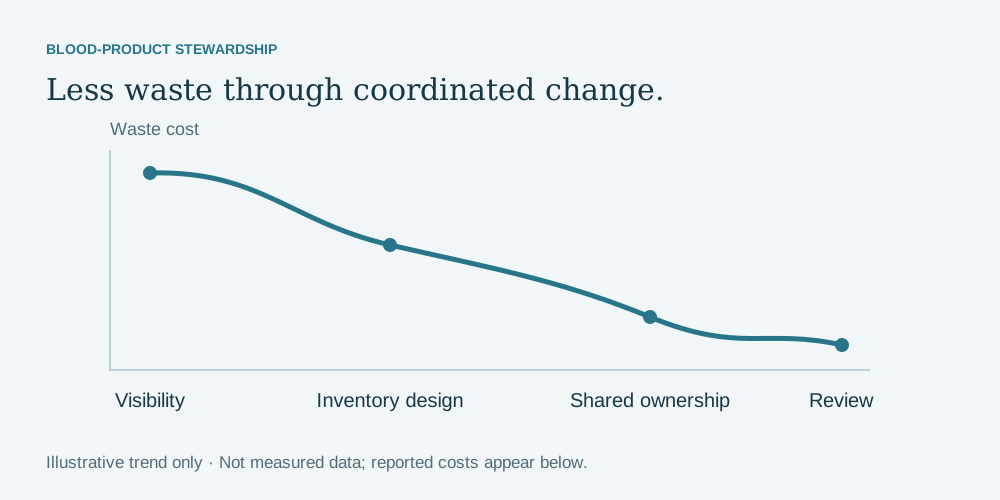
I built the initial waste tracker and used data and workflow analysis to make losses visible at the level needed for action. The work brought clinical, laboratory, and operational stakeholders together around inventory levels, product rotation, expiration monitoring, and near-expiry use.
Supplier optimization, education, low-dose platelet analysis, and a cold-stored platelet strategy were supporting elements of the broader stewardship effort.
Reported financial impact
| Period | All-product waste |
|---|---|
| FY22 | Approximately $720,000 |
| FY23 | $547,000 |
| FY24, annualized from partial-year data | Below $300,000 |
Historical figures reported in my clinical-systems portfolio. FY24 is an annualized estimate from available partial-year institutional data; the final full-year value was unavailable after my transition to a new role. These are waste costs, not a claim of independently attributable savings.
The systems lesson
The improvement depended on a coordinated operating model. Data visibility made it possible to govern a high-cost, short-shelf-life product, assign responsibility, and sustain changes in daily work.
From clinical need to institutional action.
These projects connect clinical expertise, usable systems, and accountable decisions—the same concerns that shape my approach to clinical informatics.