
A bounded clinical reference system.
A source-grounded reference assistant for high-complexity transfusion-medicine work.
Prototype in development; not a validated autonomous clinical system
Reference-system design, source curation, and workflow evaluation
The problem
Protocols, procedure details, dosing guides, and local process rules can be distributed across many documents. Finding an answer often requires remembering where the source lives before knowing what it says.
The system design
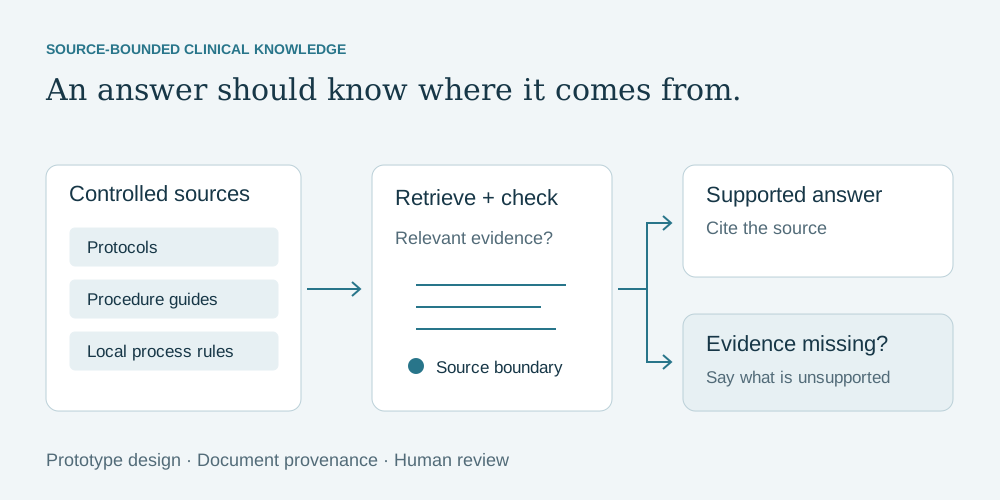
I am building a reference assistant around a controlled document repository. Answers are intended to stay within that source set, cite the supporting document, and make unsupported questions visible rather than fill gaps with generic knowledge.
Durable reference material remains separate from conversational output so that the source base can be maintained and audited.
What is being evaluated
Prototype work includes procedure and order-support scenarios, source retrieval, citation fidelity, and refusal of unsupported claims. The ongoing task is to determine whether those boundaries hold reliably in real workflow questions.
The intended value is rapid point-of-work retrieval, more consistent onboarding, and a maintainable clinical knowledge layer. These are design goals rather than claims of validated clinical benefit.
The design principle
For high-risk clinical work, knowing the source—and recognizing when the source does not support an answer—is part of the system’s function.
From clinical need to institutional action.
These projects connect clinical expertise, usable systems, and accountable decisions—the same concerns that shape my approach to clinical informatics.