
Sickle-cell exchange dashboard.
Connecting longitudinal red-cell exchange data to multidisciplinary care planning at Phoenix Children’s.
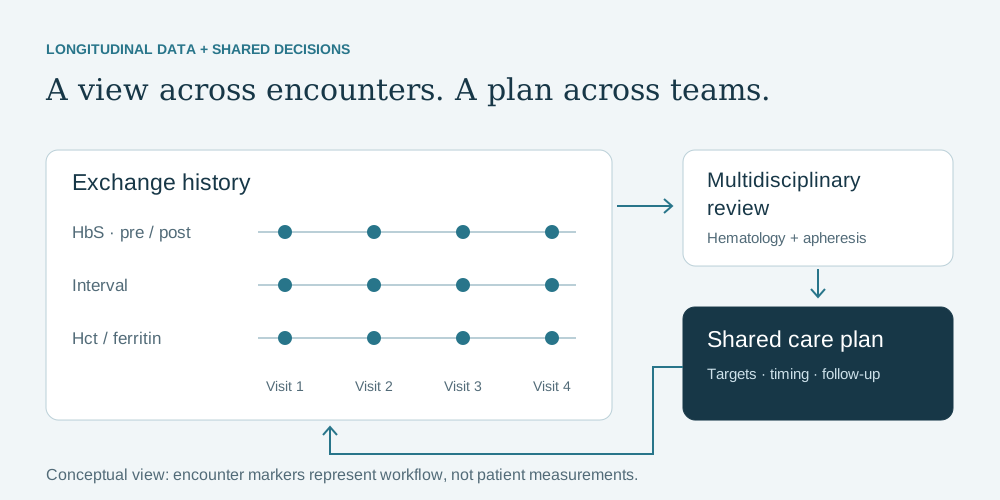
Dashboard integrated into care review and program governance
Clinical product owner: requirements, metrics, iterative review, adoption, and governance
The clinical need
Chronic red-cell exchange produces repeated procedures, laboratory results, targets, and scheduling decisions. Those data are difficult to interpret when they remain scattered across individual encounters.
The service needed a shared longitudinal view for both patient-level and cohort-level review.
My role and the technical partnership
I defined the clinical requirements and longitudinal metrics, then partnered with Clinical Informatics and analytics colleagues through iterative development. They provided the technical build; my work focused on the clinical product and how it would be used.
The dashboard brought together pre- and post-exchange HbS, treatment intervals, hematocrit, and ferritin to support review of effectiveness, timing, safety, and treatment burden.
The dashboard as part of governance
I integrated the resulting tool into multidisciplinary care planning with hematology and transfusion/apheresis physicians. The meeting structure supported prospective review, exchange standardization, and consensus longitudinal plans.
The goal was continuity across procedures: a shared care plan that informs the next decision and can be revisited as the patient’s course evolves.
What this work demonstrates
Clinical informatics leadership includes defining the right product, working with technical partners, supporting adoption, and building a decision process around the resulting information.
From clinical need to institutional action.
These projects connect clinical expertise, usable systems, and accountable decisions—the same concerns that shape my approach to clinical informatics.